
Company Registration: 10273019
When homeowners think about their flat roof, they think about the membrane on top. Is it watertight? Is it showing its age? Will it handle another Wiltshire winter? What rarely gets a second thought is what's happening underneath that membrane. And that's where a lot of the real damage quietly begins.
Poor ventilation is one of the leading causes of flat roof failure, and in our 50-plus years of working on roofs across Swindon, Wiltshire, and the surrounding areas, we've seen it cause more damage than almost anything else. The frustrating part is that it's almost entirely avoidable. Here's what you need to know.
A flat roof is more than just a waterproof layer. Below the membrane sits a build-up of materials that include insulation, a vapour control layer, timber decking, and joists. This structure traps air, and that air needs somewhere to go.
When a flat roof is properly ventilated, fresh air can move through the roof structure. This keeps the temperature stable and prevents moisture from building up inside the roof build-up itself.
Without that airflow, you get two compounding problems: heat and moisture. And together, they cause serious damage.
Warm, moist air from inside your property, from cooking, showering, and breathing, rises and finds its way into the roof structure. When it meets the cooler surfaces inside the roof build-up, it condenses into liquid water. This isn't a slow drip from a leak. It's moisture forming within the structure itself, where you can't see it and can't easily dry it out.
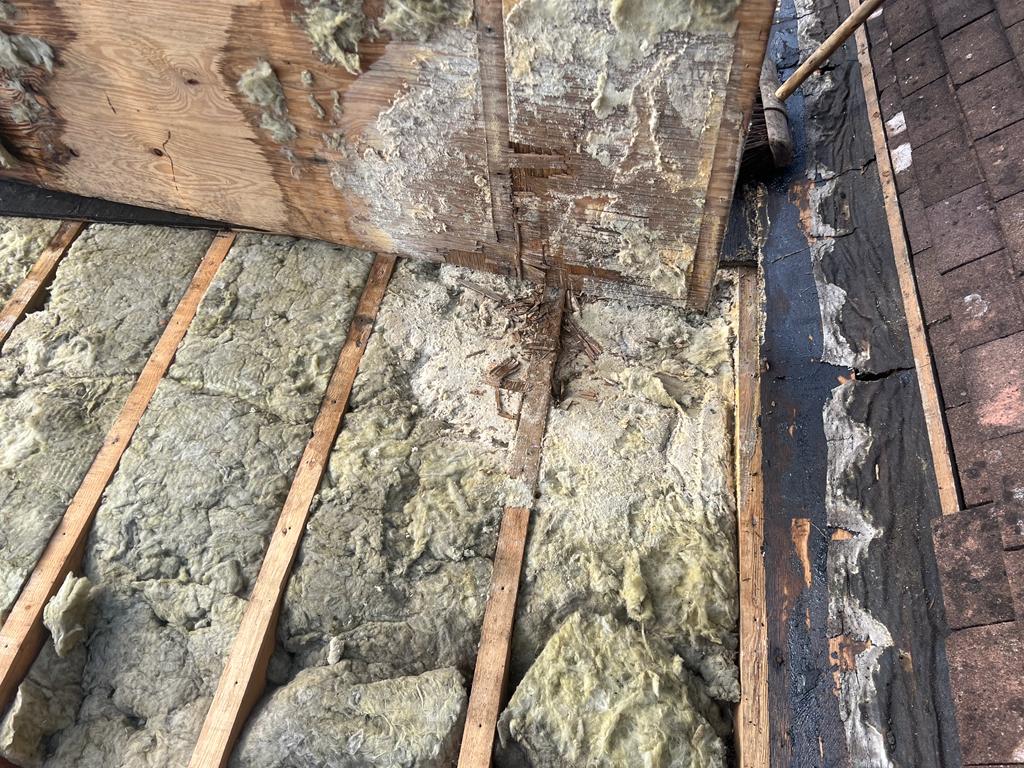
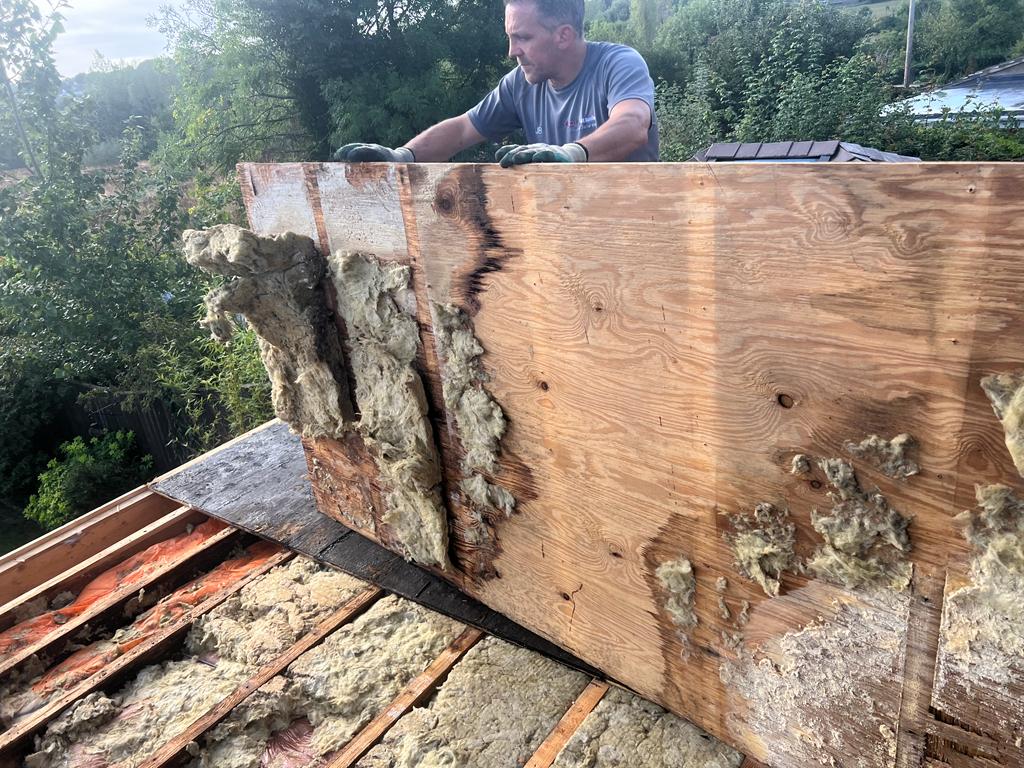
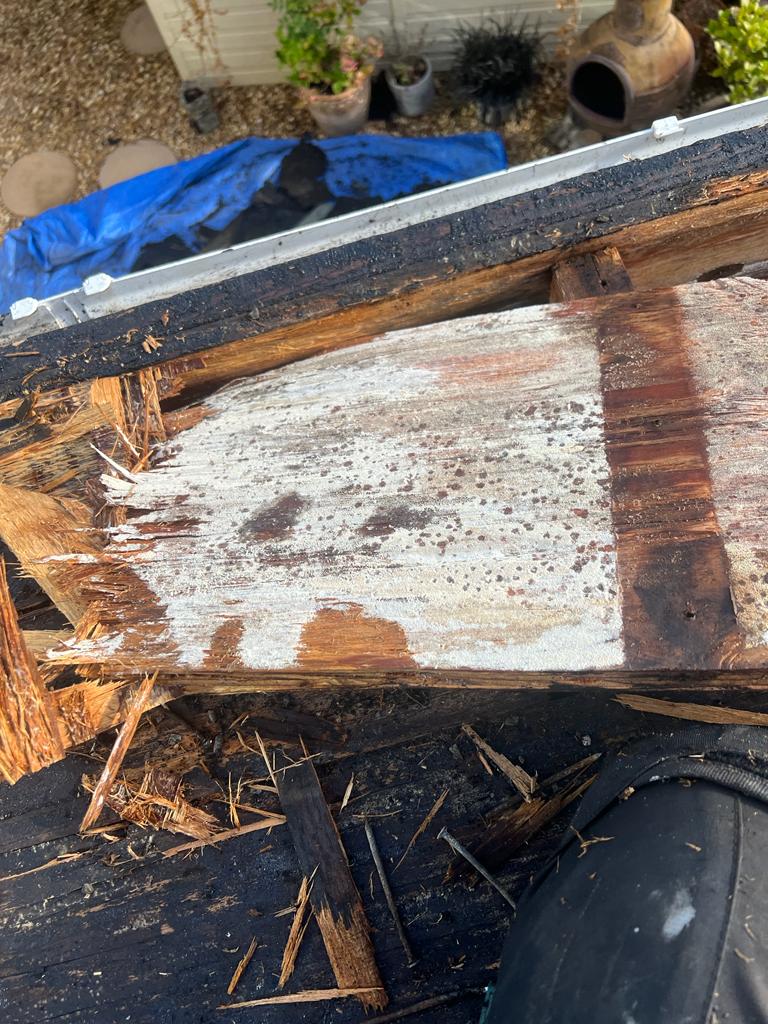
Once moisture gets into the decking and joists, timber begins to degrade. This can happen gradually over months or years, so by the time you notice a problem, for example, a sag in the ceiling, or a musty smell, the damage is often already significant.
Timber rot is not a cosmetic issue. It's a structural one. In some cases we've attended, the decking had deteriorated so badly that the entire roof structure needed replacing, not just the membrane.
Where there's trapped moisture and warmth, mould follows. This can spread through the roof structure and, in more serious cases, into the rooms below. Beyond the physical damage, mould poses a genuine health risk, particularly for anyone with respiratory conditions.
Wet insulation doesn't insulate. Once the mineral wool or rigid foam inside your roof absorbs moisture, its thermal performance drops significantly. You'll notice higher energy bills before you notice a roof problem, so the issue often goes undiagnosed longer than it should.
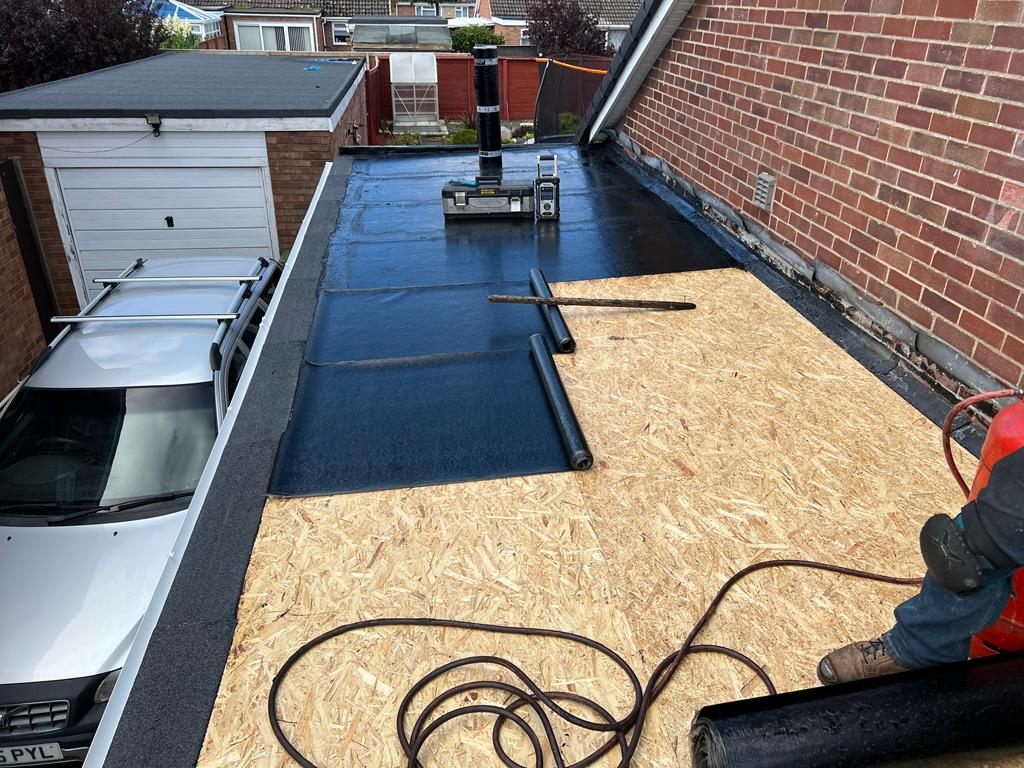
Heat and moisture trapped beneath the membrane cause it to expand, contract, blister, and eventually crack or split. A flat roof that should last 20–30 years with quality materials can fail in half that time if the ventilation beneath it isn't right.
We've had customers call us about a roof that was only a few years old, wondering why it was already showing problems. Often, poor ventilation is the culprit and not the material itself.
No ventilation designed in at all. Older flat roofs, particularly those built before modern building regulations, were often constructed without any deliberate ventilation path. It was simply not standard practice.
Blocked or insufficient vents. Even roofs with vents can suffer if those vents become blocked with debris, or if there aren't enough of them to create meaningful airflow across the full span of the roof.
A missing or ineffective vapour control layer. A vapour control layer sits on the warm side of the insulation and limits how much moisture-laden air enters the roof structure in the first place. If it's absent, poorly fitted, or punctured, moisture gets in regardless of how well the roof is otherwise ventilated.
Incorrect insulation specification. The type and position of insulation affects how ventilation needs to be designed. A warm roof and a cold roof are ventilated differently, and confusing the two is a common error in cheaper or less experienced work.
Poor workmanship on previous repairs. Patched or badly repaired areas can disrupt the continuity of both the membrane and the ventilation pathway, creating localised damp spots.
Flat roof ventilation issues don't always announce themselves immediately. Here are the signs worth paying attention to:
None of these symptoms are definitive proof of a ventilation problem. Some of them overlap with other roof issues, but any of them are worth getting looked at by a professional.
If you have an existing flat roof and aren't sure whether ventilation is adequate, don't wait for a problem to appear. A free roof inspection is a much smaller investment than dealing with rotten decking and a failed membrane.
If you're planning an extension, a garage, a studio, or any structure with a flat roof, make sure you're working with a contractor who treats ventilation as a fundamental part of the specification and not an optional extra.
Highworth Felt Roofing has been replacing and repairing flat roofs right across Swindon, Wiltshire, Gloucestershire, and Oxfordshire for over 50 years. If you'd like us to take a look at your roof, or if you're planning new work and want advice from a team who knows flat roofing inside out, get in touch for a free, no-obligation quote.
Call us: 01793 271900 or 07737 973385
Email: richard@highworthfeltroofing.co.uk
Highworth Felt Roofing Ltd — Trading Standards Buy with Confidence approved. Icopal and IKO-approved installers. Fully insured.
If you would like a free, no-obligation estimate, please contact us today.
Based in Swindon, we proudly cover the following areas: Wiltshire, Gloucestershire, and Oxfordshire.